
Drawerology Team
How to Organize Deep Drawers (Best Solutions for Kitchen & Beyond)
Learn how to organize deep drawers with expandable dividers, pegboard systems, and fully custom organizers. Find the best solution for your space.
April 7, 2026
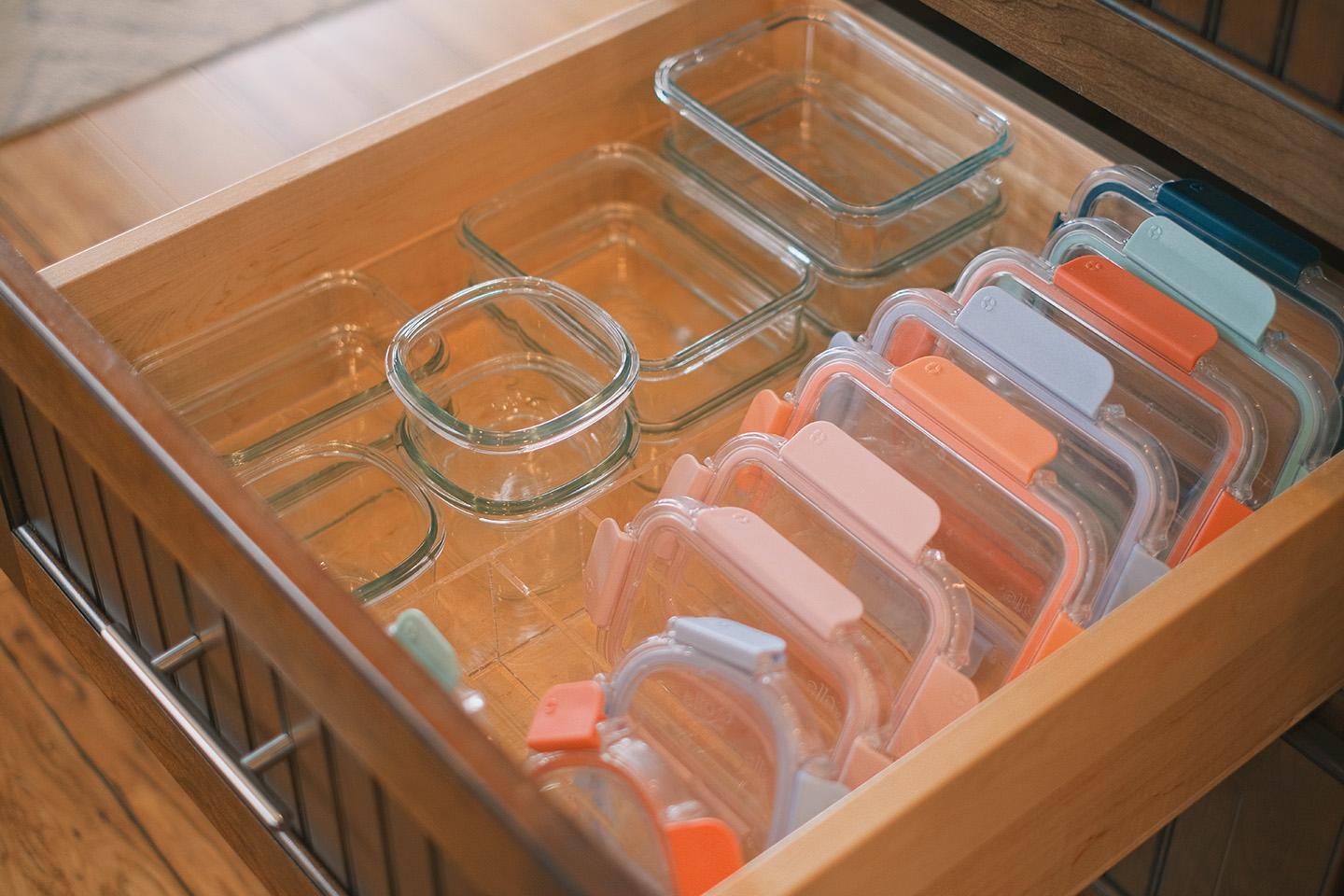
How to Organize Deep Drawers (Without Wasting Space)
How do you organize deep drawers?
The best way to organize deep drawers is to divide them into fixed compartments so items don't stack or shift. Custom-fit organizers work best because they use the full depth and keep everything visible.
Deep drawers are great until everything gets stacked, buried, and impossible to find.
If you've ever had to dig through piles of utensils, containers, or tools just to find one item, the issue isn't the drawer. It's the lack of structure inside it.
Why Deep Drawers Get Messy So Fast
Deep drawers create a unique problem: they encourage vertical stacking.
Once items stack:
- You lose visibility
- Things shift every time the drawer opens
- The bottom layer becomes unusable
Most organizers fail here because they aren't designed for depth. They're designed for shallow drawers.
Step 1: Stop Stacking, Start Separating
Deep drawers fail when items are stacked vertically instead of organized horizontally.
You want:
- Clear sections
- Items visible at a glance
- No digging required
What is the best organizer for deep drawers?
Custom drawer organizers are the best option for deep drawers because they create fixed compartments that fully use the available space and prevent items from shifting or stacking.
Option 1 (Good): Expandable Drawer Dividers
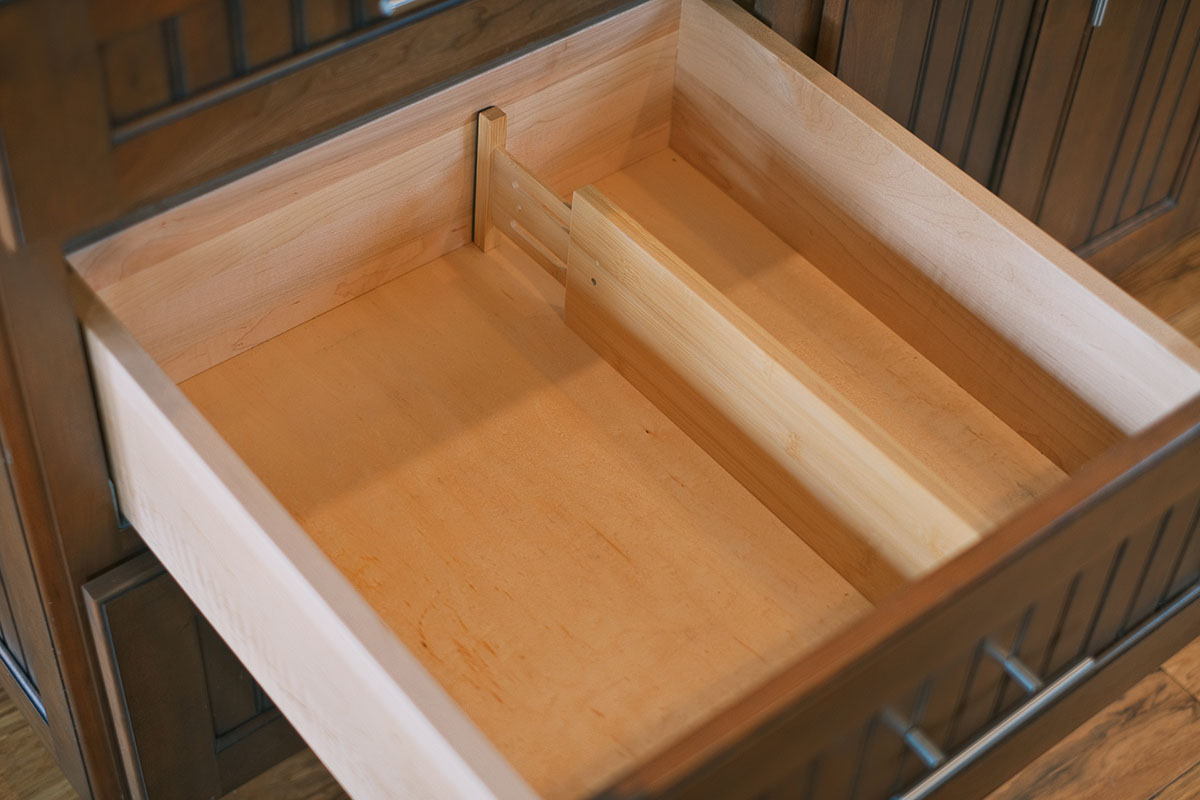
Expandable dividers are the fastest and cheapest way to create sections in a deep drawer. They use spring-loaded or tension-fit rails that press against the drawer walls, then slide to the width you need so you can split one large space into long lanes. Instead of one open area where items drift together, the dividers create basic boundaries that keep categories separate and easier to access.
Pros
- Easy to install (no tools)
- Adjustable width
- Affordable
Cons
- Only creates rows (no true compartments)
- Because they rely on friction fit, they can get bumped out of place over time
- Doesn't fully use drawer depth
Best for
- Utensils
- Linens
- Light kitchen tools
Verdict: Quick improvement, but doesn't solve deep drawer problems completely.
Option 2 (Better): Pegboard Drawer Organizers
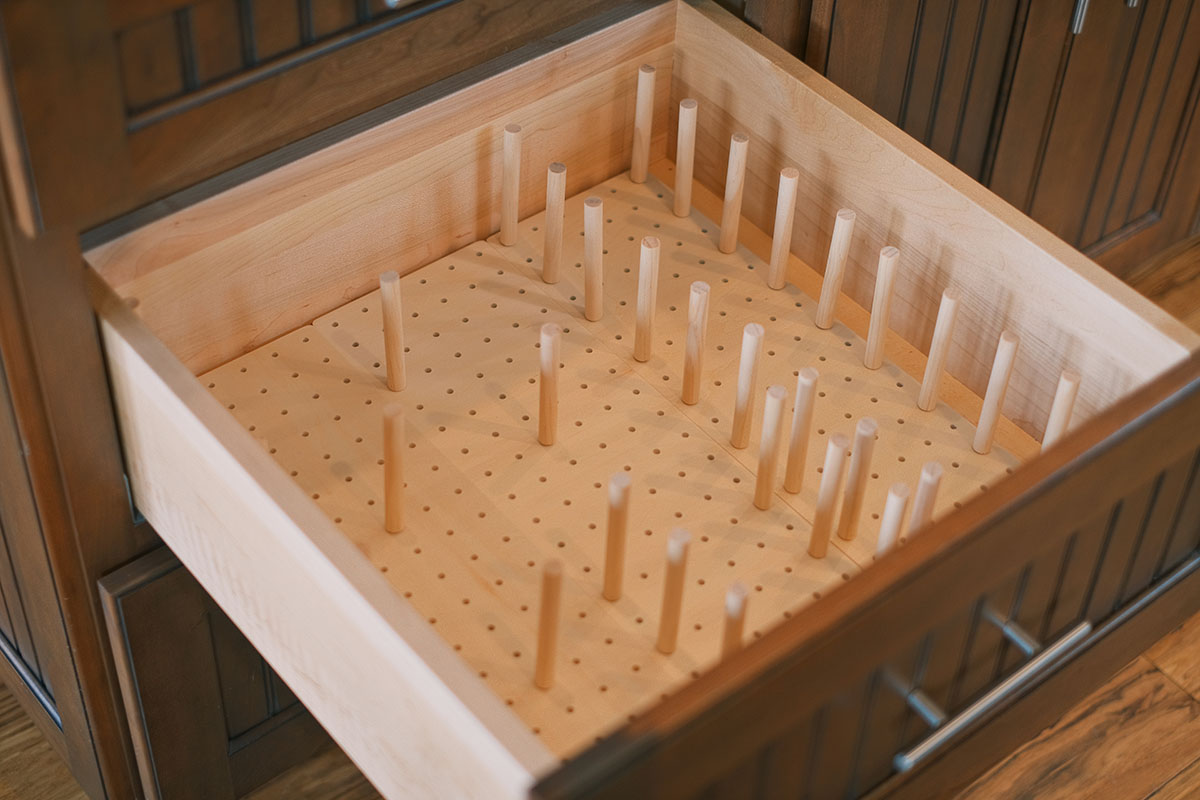
Pegboard systems use a grid base with movable pegs to create flexible compartments. A flat pegboard-style tray sits inside the drawer, and you place pegs into different holes to build custom zones around your items. As your storage needs change, you can move the pegs and reshape each section without replacing the whole organizer.
Pros
- More customizable than dividers
- Helps prevent movement
- Works well for larger or awkward items
Cons
- Leaves unused space between items
- Can shift over time
- Still not a precise fit
Best for
- Pots and pans
- Food storage containers
- Mixing bowls
Verdict: A strong middle-ground, but still compromises on space efficiency.
Option 3 (Best): Fully Custom Drawer Organizers
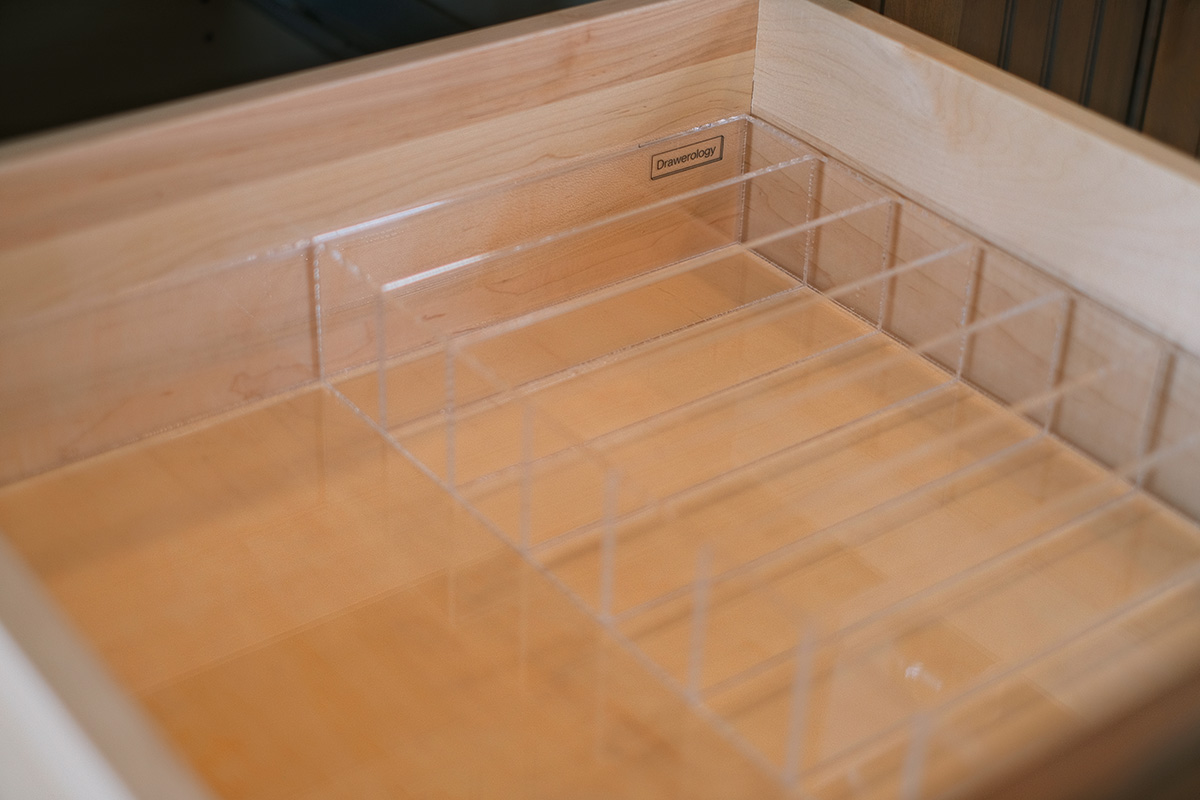
A custom organizer is designed around your exact drawer dimensions and the items you want to store. It is made to fit wall-to-wall and front-to-back, with fixed compartments planned for your specific tools, containers, and daily routines. Because every divider position is intentional, the organizer controls movement, prevents overlap, and turns deep space into clearly usable sections.
Instead of forcing your items to fit a generic system, every compartment is intentionally sized and placed.
Before designing, make sure your measurements are right: How to Measure Your Drawer
Why custom works better in deep drawers
Generic organizers leave gaps. In deep drawers, those gaps turn into shifting, stacking, and wasted space.
A custom layout:
- Eliminates unused gaps
- Keeps everything locked in place
- Uses the full depth intentionally
Pros
- Uses 100% of drawer space
- Every compartment is intentional
- Nothing slides or shifts
- Clean, high-end look
Cons
- Requires planning (once)
Best for
- High-use kitchen drawers
- Deep storage drawers
- Anyone tired of reorganizing repeatedly
Verdict: The strongest long-term option for most deep drawers, especially when you want maximum space efficiency and consistency.
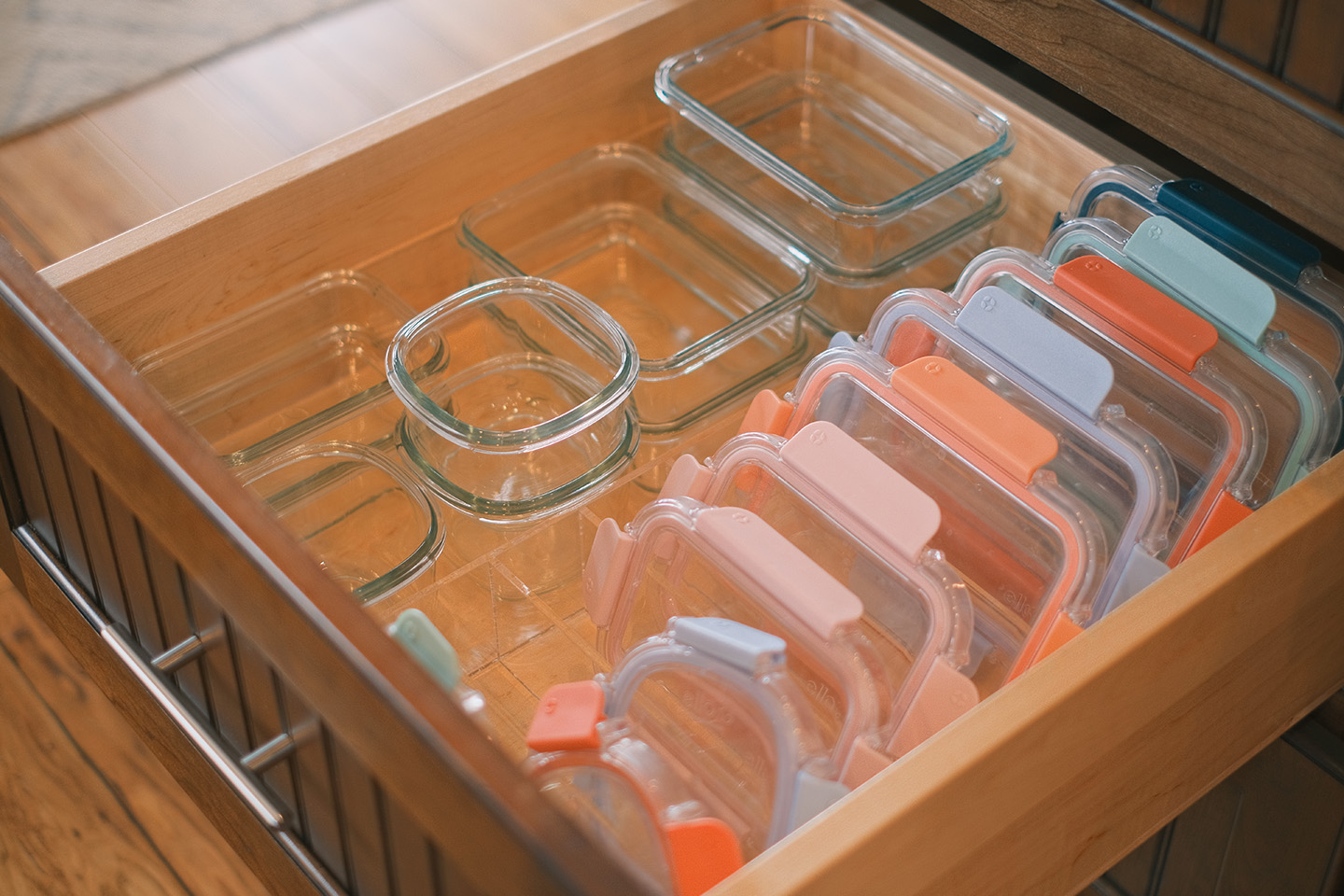
Good vs Better vs Best (Quick Comparison)
Expandable Dividers
- Cost: $
- Customization: Low
- Stability: Low
- Space Usage: Medium
Pegboard Systems
- Cost: $$
- Customization: Medium
- Stability: Medium
- Space Usage: Medium
Custom Organizer
- Cost: $$$
- Customization: High
- Stability: High
- Space Usage: High
How to Organize Deep Kitchen Drawers
Organizing deep kitchen drawers comes down to grouping items by function and giving each group a defined space.
Common setups that work well:
- Pots and lids separated into dedicated sections
- Food containers grouped by size
- Cooking utensils divided by type
Avoid stacking lids, containers, or tools. This is what causes clutter to return quickly.
Best Ways to Organize Different Deep Drawers
Deep Kitchen Drawers
Use pegboard or custom organizers for pots, lids, and containers.
Deep Junk Drawers
Use fixed compartments to prevent everything from becoming a pile.
Deep Bathroom Drawers
Use dividers or custom inserts for toiletries, tools, and small items.
Deep Tool or Utility Drawers
Use rigid compartments so tools don't shift or overlap.
Common Mistakes to Avoid
- Stacking items on top of each other
- Using organizers that don't fit the drawer
- Leaving empty gaps between items
- Mixing unrelated items in the same section
How to Choose the Right Option
- Quick fix: Dividers
- Want flexibility: Pegboard
- Want it done right: Custom
If you use the drawer daily, investing in a proper layout usually saves time every single day.
Pro Tips for Organizing Deep Drawers
- Keep frequently used items toward the front
- Group by function, not size
- Design around how you actually use the drawer
- Prioritize visibility over density
Design Your Own Custom Drawer Organizer
Start designing your custom drawer organizer
It takes a few minutes and gives you a layout built specifically for your drawer and your items.
Final Takeaway
Deep drawers aren't the problem. Unstructured space is.
Once everything has a defined place, deep drawers become one of the most efficient storage areas in your home.